Welcome to the University of Lethbridge
  • Library
  • Directory
  • Intranet
  • MyExperience
  • Webmail
  • Bridge
  • Moodle
Study here Give

Provost & Vice-President (Academic)

Teaching Centre

Welcome to the University of Lethbridge
Close
  • About our Centre
    • Advisory Council
    • Agility
    • Board of Governors Teaching Chair
    • Celebrating Student-Centred Educators
    • Centre Staff
    • Firefly Newsletter
    • Teaching Fellows
    • The Testing Centre
    • U of L Excellence in Teaching Award
  • Teaching A-Z
    • Academic Integrity
    • Accommodations
    • Active Learning
    • Constructing a Course Outline or Syllabus
    • Exams and Assignments
    • Instructional Spaces
    • Light on Teaching Magazine Archive
    • Open Education
    • Teaching Online and Blended Learning
    • Teaching and Learning Video Showcase
    • Universal Design for Learning (UDL)
    • Reflective Teaching
  • Inclusion
  • SoTL
    • SoTL Grants
    • SoTL Process
    • SoTL Resources
  • Workshops and Events
  • ReSET
    • ReSET - Caring
    • ReSET - Effective
    • ReSET - Engaging
    • ReSET - Inclusive
    • ReSET - Adaptive
  • Moodle and Ed Tech
    • Moodle
    • AI Resources
    • Crowdmark
    • ePoll
    • Discord
    • H5P
    • Lightboard
    • Microsoft 365
    • Syzygy
    • Zoom
    • Turnitin
    • YuJa
  • Library
  • Directory
  • Intranet
  • MyExperience
  • Webmail
  • Bridge
  • Moodle
Study here Give
Study here Give

Reflective Teaching Frameworks

Although 'Reflective Teaching' has many specific definitions, at its heart it is the process of actively seeking out evidence of the effectiveness of teaching, analyzing that evidence, and then coming up with and employing ways to continuously improve. 

Two formal frameworks that are a great starting point for reflective practice,  easy to apply to your teaching, and scale easily from activity to class to course level are:

What?-So What?-Now What?

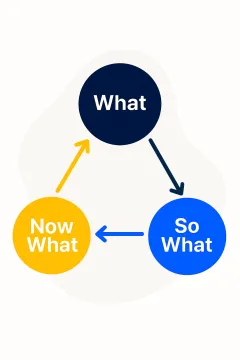
The ease of this model is based on its simplicity of 3 questions, asked and recorded in a cycle. One iteration of the cycle leads to further action, which in turn renews the cycle. 

This model is largely attributed to Rolfe, Freshwater and Jasper (2001), but can be traced back to Borton(1970) in his book on learning. 
Image
Reflective model incorporating three stages - what (describing the experience, its impact on facilitators and participants), So What (analyzing the impact and implications) and Now What (developing and enacting a response to the experience)

AI Generated Graphic 

Applied to reflection on teaching, some possible questions to answer in each of the 3 categories:

  What  

 So What

Now What

  • What were the desired outcomes of the activity?
  • What did you do to facilitate the activity?
  • What was the engagement like with the activity? Between students? Between you and students?
  • What questions were asked?
  • What feelings did it evoke in you? Students?
  • How did your students react?
  • What feedback did you receive?
  • How long did the activity take? Was it 'finished'?
  • Were the outcomes achieved? How do you know?
  • What went well? Why? (consider your contributions and other factors)
  • Would you do the activity again? With modifications?
  • What do you need to know to make modifications?
  • What did not got well? Why?(consider your contributions and other factors)
  • What resources (research, consultation, etc.) do you  need to make modifications or re-formulate the activity?
  • what is your new understanding of the events/activity?
  • What modifications  or changes do you want to make?
  • What is the predicted impact of these for students? For you? on other activities?
  • How will you communicate these changes and the reasoning behind them?
  • How will you collect feedback and assess the impact and success of the new/modified activity?

Reference:

Borton. T. (1970). Reach Touch and Teach: Student Concerns and Process Education. McGraw-Hill, New York

Rolfe, G., Freshwater, D., Jasper, M. (2001). Critical reflection in nursing and the helping professions: a user’s guide. Basingstoke: Palgrave Macmillan.

Gibbs Reflective Cycle

While not just for education, Gibbs' (1988) reflective cycle is easily tailored to reflect on an activity, a full lesson, or can scale up to reflect on the unit or entire course. 

Image
Image of Gibbs' Reflective Cycle. Steps are a cycle of Description, Feelings, Evaluation,  Analysis, Conclusion, Action Plan

Some Teaching specific tips for the cycle:

  1. Description - try to record what happened as a neutral observer - what you did and said and what students did and said without any interpretation.

  2. Feelings - recording how you felt at times during the activity or lesson is important, as our emotions can be a good reflection of the things that went well, that we want to adjust, or that we are just not sure about!

  3. Evaluation - be as honest and impartial as possible. It is very important to identify what went well first! Humans naturally default to identifying problems or things that need changing and gloss over what went well and what should continue happening. This also puts us in a more positive mindset which is more productive.

  4. Analysis - again - start with what went well and ID your actions that contributed. Then move on to events that you wish to improve.

  5. Conclusion - start with what you will keep! It is much more manageable to make incremental changes and choose one or two alterations for next time.

  6. Action Plan - Focus on what you can control and influence, and set realistic targets. How will you collect information and assess the changes? Challenge yourself to step outside your comfort zone a little at a time, and see how it works!

References:

Gibbs, Graham. (1988). Learning by doing: a guide to teaching and learning methods. London: Further Education Unit. 

https://www.bitesizelearning.co.uk/resources/gibbs-reflective-cycle-explained-diagram-examples

There are many other frameworks that can be employed for reflective teaching practice. Some of the most popular include:

Image
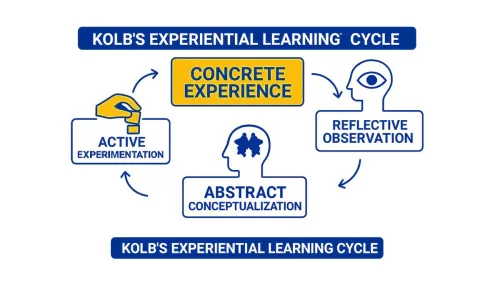
Kolb's Experiential Learning Cycle -  active learning, concrete experience, reflective observation, and abstract conceptualization in continuous cycle

AI generated image 

References: 

Kolb, D.A. (1984). Experiential learning: experience as the source of learning and development. Englewood Cliffs, NJ: Prentice Hall https://www.nicole-brown.co.uk/reflective-model-according-to-kolb/

Image
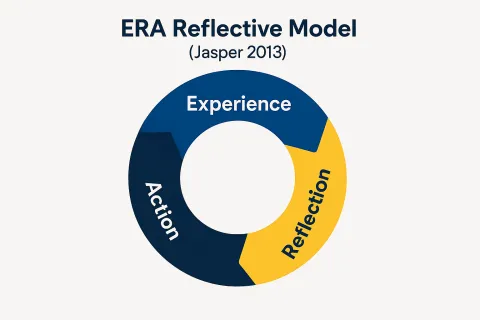
ERA reflective model fro, Jasper (2013) - Experience, reflection, and action in a continuous cycle. Image AI generated

AI generated image

 References: 

Jasper, M. (2013) Beginning Reflective Practice. 2nd edn. Hampshire: Cengage Learning.

https://crowjack.com/blog/strategy/reflection-models/era-cycle


Image
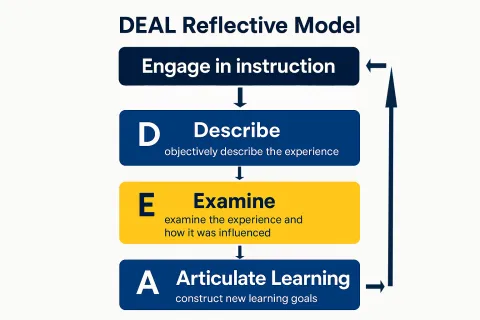
DEAL Reflective Model Cyclic Progression: Engage in Instruction, Describe lesson, examine, articulated learning, apply to new lessons (AI Generated)

AI generated image

References: 

Ash, S. L., & Clayton, P. H. (2009). Generating, deepening, and documenting learning: The power of critical reflection in applied learning. Journal of Applied Learning in Higher Education, 1(1), 25-48.

https://www.queensu.ca/experientiallearninghub/sites/qelhwww/files/uploaded_files/EL%20Faculty%20Toolkit/DEAL%20Model%20for%20Critical%20Reflection%202024.docx

Related Links

  • VP Academic
  • Classroom Support
  • Board of Governors' Teaching Chair
  • Excellence in Teaching Award
  • Agility

Tools

  • Moodle
  • Moodle Answers
  • Turnitin

Connect with us

  • Events
  • Facebook
  • YouTube

Teaching Centre

  • L1126 (LINC(Library) Building)
  • 403-380-1856
  • teachingcentre@uleth.ca

Students

  • Academic calendar
  • Student Enrolment and Registrar Services
  • Student opportunities
  • Student services
  • Study here

Information for

  • Alumni
  • Donors
  • Visitors and community

Campus

  • Careers at uLethbridge
  • Events
  • Faculty and staff intranet
  • Maps and tours
  • News

Lethbridge Campus
4401 University Drive
Lethbridge, Alberta, T1K 3M4

Calgary Campus
Suite 6032, 345-6th Ave SE
Calgary, Alberta, T2G 4V1

Contact Us

Faculty & Staff Directory


Visit the University of Lethbridge Homepage

The University of Lethbridge is located on traditional Blackfoot Confederacy territory. We honour the Blackfoot people and their traditional ways of knowing in caring for this land, as well as all Indigenous peoples who have helped shape and continue to strengthen our University community.

Follow us on social media


©2026 University of Lethbridge | Terms of use