
Biochemistry
Credentials available
- Bachelor of Science
Campus
- Lethbridge
Intake
Program description
Forensics. Pharmacology. Food science. What do these three areas have in common? They are just some of the career paths you can take with a degree in biochemistry.
Biochemistry is the study of all living systems at the molecular level. It looks at the chemical and physical basis of life and how these living systems interact with their environments. It is a demanding field that combines expertise in the biological sciences, chemistry, physics and mathematics. Versatility and intense curiosity are the hallmarks of successful biochemists, as they draw on knowledge from a variety of fields to investigate the molecules that facilitate life.
From the structure, function and dynamics of molecular machines, to the complex regulation of metabolic pathways and biological processes, biochemists study the extraordinary molecules that are produced and utilized by living systems. As a consequence, many of the most spectacular advances in the sciences are driven by discoveries in biochemistry.
Biochemistry will help you develop a strong background in the basic sciences and extensive laboratory skills, while emphasizing the chemical and physical basis of life. As a biochemistry student, you will gain hands-on experience with the latest tools and technology used in chemistry, physics and biological sciences, such as molecular biology, protein crystallography and advanced biophysics. You will also develop skills in molecular techniques like DNA sequencing, gene cloning and enzymology.
Additionally, you will have access to state-of-the-art science and research facilities. These facilities support the research interests of our award-winning faculty, your instructors, as they investigate diverse areas such as cancer research, toxicology, crystallography, bioinformatics and molecular modelling, as well as applied research in medicine, disease research and food development.
Minors | Adding a minor to your degree is a great way to explore academic interests beyond your major. A minor is a set of courses comprising a secondary focus of interest. It is generally not related to your major. A minor may be required or optional. Pursue a second passion by adding a minor to your degree.
Honours thesis | If your GPA is high enough in your fourth year, you can opt to complete an undergraduate thesis course. This is an excellent opportunity for you to earn an “Honours Thesis” designation on your degree.
Experience learning | Our students have a number of experiential learning opportunities available to them including co-operative education, international exchanges, independent and applied studies as well as volunteer opportunities. uLethbridge is the only university in Alberta to offer co-operative education to all majors in the arts & sciences, at both the undergrad and grad level. Transfer students can actually head out on their first work term before ever stepping foot on campus! For example, many transfer students have completed a summer work term before starting classes in September.
Skills acquired | In addition to developing exceptional written and oral communication skills in this program, you’ll also develop strong critical and analytical thinking skills, advanced information acquisition and management skills, as well as precise attention to detail. All of these abilities are highly sought after in the business world and can be applied to practically any scenario.
Possible careers
Biochemists are employed in virtually all areas of the life sciences as a result of their strong foundation in the basic sciences and extensive laboratory experience. Here are just a few of the career options open to you once you’ve earned your degree:
- Laboratory Scientist
- Laboratory Technician
- Research Assistant
- Agricultural Chemistry
- Soil Science
- Food Technology
- Biotechnology
- Bioenergy
- Forensic Science
- Drug Development
- Toxicology
- Pathology
- Commercial Research
- Academia
Professional disciplines & graduate studies | Your undergraduate degree in biochemistry provides an excellent foundation for medicine, veterinary medicine, pharmacy, dentistry and research. The University of Lethbridge’s School of Graduate Studies offers programs at the master's and doctoral levels, in more than 60 disciplines — so why not consider pursuing grad school right here in Lethbridge! Whether you choose to do your advanced studies at uLethbridge or another institution, know that your undergraduate degree has set you on the path to post-graduate success
.
Admission requirements for Biochemistry
For admission, Canadian high school students in Alberta must have completed five of the following courses with a minimum 65% average across them:
This course is required:
- English Language Arts 30-1
Three of these courses are required:
- Aboriginal Studies 30
- Art 30 or Art 31
- Biology 30
- Chemistry 30
- Choral Music 30, General Music 30, or Instrumental Music 30
- Dance 35
- Drama 30
- Mathematics 30-1 or Mathematics 30-2
- Mathematics 31
- Physics 30
- Science 30
- Social Studies 30-1 or Social Studies 30-2
- Five credits in Advanced-level CTS Computer Science (CSE)
- One or more distinct languages at the 30 level
One additional requirement from this list:
- That has not already been used
- May be from the list above
- Must be at the 30 level
- Must be worth at least five credits (multiple courses worth a total of five or more credits can be used)
- Cannot be a Special Project
For admission, Canadian high school students in British Columbia must have completed five of the following courses with a minimum 65% average across them:
One of these courses is required:
- English 12
- English First Peoples 12
Three of these courses are required:
- One or more distinct languages at the 12 or 12A level
- Human Geography 12 or Physical Geography 12
- BC First Peoples 12 or Contemporary Indigenous Studies 12
- Political Studies 12
- Law Studies 12
- Comparative Cultures 12
- Asian Studies 12
- 20th Century World History 12
- Social Justice 12
- One of Pre-Calculus 12 or Foundations of Mathematics 12
- Calculus 12
- Anatomy & Physiology 12
- Chemistry 12
- Physics 12
- Composition 12
- Creative Writing 12
- New Media 12
- Spoken Language 12 or Literary Studies 12
- Geometry 12
- Statistics 12
- Computer Science 12
- Environmental Science 12
- Specialized Science 12
- Economic Theory 12
- Geology 12
- Studio Arts 3D 12,Studio Arts 2D 12, or Art Studio 12
- Dance Foundations 12, Dance Company 12, Dance Conditioning 12, or Dance Technique and Performance 12
- Drama 12
- Choral Music: Chamber Choir 12, Composition and Production 12, or Instrumental Music: Orchestra 12
One additional requirement from this list:
- That has not already been used
- May be from the list above
- Must be at the 12 level
- Must be worth at least four credits
For admission, Canadian high school students in Manitoba must have completed five of the following courses with a minimum 65% average across them:
One of these courses is required:
- Comprehensive Focus 40S
- Literary Focus 40S
- Transactional Focus 40S
Three of these courses are required:
- Biology 40S
- Chemistry 40S
- Computer Science 40S
- Current Topics in FNMI Studies 40S
- Drama 40S or Drama 45S (maximum one credit)
- Global Issues 40S
- History: Western Civilization 40S
- Interdisciplinary Topics in Science 40S
- Pre-Calculus Mathematics 40S or Applied Mathematics 40S
- Advanced Mathematics 45S and Calculus 45S
- Music 40S or Music 45S (maximum one credit)
- Physics 40S
- Visual Arts 40S or Visual Arts 45S (maximum one credit)
- Geography: World Human 40S
- One or more distinct languages at the 40S or 30S (min. 4yr) level
One additional requirement from this list:
- That has not already been used
- May be from the list above
- Must be at the 40 level
- Must be designated S, G, or U
- Must be worth at least one credit (two half-credit courses may be used)
For admission, Canadian high school students in New Brunswick must have completed five of the following courses with a minimum 65% average across them:
One of these courses is required:
- English 122
Three of these courses are required:
- Biology 121 or Biology 122
- Calculus 120
- Canadian Geography 120
- Canadian History 120
- Chemistry 121 or Chemistry 122
- Dramatic Arts 120 or Film 120
- Economics 120
- Environmental Science 120
- One of Foundations of Mathematics 120 or Pre-Calculus A120 and Pre-Calculus B120 (counts as one course)
- Music 122, Popular Music 120 or World Music 120
- Physics 121 or Physics 122
- Political Science 120
- Psychology 120
- Science 120
- Sociology 120
- Visual Arts 120
- Wabanaki Studies 120
- World Issues 120
- One or more distinct languages at the 121 or 122 level
One additional requirement from this list:
- May be from the list above
- Must be at the 120, 121, or 122 level
- Must be worth at least one credit
For admission, Canadian high school students in Newfoundland & Labrador must have completed five of the following courses with a minimum 65% average across them:
This course is required:
- English 3201
Three of these courses are required:
- Art and Design 3200 or Visual Art 3202
- Biology 3201
- Mathematics 3208
- Chemistry 3202
- Earth Systems 3209
- Environmental Science 3205
- Advanced Mathematics 3200 or Academic Mathematics 3201
- Applied Music 3206 or Ensemble Performance 3105
- Physics 3204
- Social Studies 3201 or Social Studies 3202
- Theatre Arts 3220 or Musical Theatre 3221
- World Geography 3202 or World Geography 3208
- World History 3201 or Histoire Mondiale 3231
- One or more distinct languages at the 3200 level
One additional requirement from this list:
- May be from the list above
- Must be at the 3000 level
- Must be worth at least two credits
For admission, Canadian high school students in Northwest Territories must have completed five of the following courses with a minimum 65% average across them:
This course is required:
- English Language Arts 30-1
Three of these courses are required:
- Aboriginal Studies 30
- Art 30 or Art 31
- Biology 30
- Chemistry 30
- Choral Music 30, General Music 30, or Instrumental Music 30
- Dance 35
- Drama 30
- Mathematics 30-1 or Mathematics 30-2
- Mathematics 31
- Physics 30
- Science 30
- Social Studies 30-1 or Social Studies 30-2
- Five credits in Advanced-level CTS Computer Science (CSE)
- One or more distinct languages at the 30 level
One additional requirement from this list:
- That has not already been used
- May be from the list above
- Must be at the 30 level
- Must be worth at least five credits (multiple courses worth a total of five or more credits can be used)
- Cannot be a Special Project
For admission, Canadian high school students in Nova Scotia must have completed five of the following courses with a minimum 65% average across them:
One of these courses is required:
- English 12
- English 12 (Advanced)
- English 12 African Heritage
Three of these courses are required:
- Biology 12 or Advanced Biology 12
- Canadian Literature 12
- Calculus 12
- Chemistry 12 or Advanced Chemistry 12
- Drama Theatre Arts 12
- Economics 12
- Film and Video Production 12
- Geology 12
- Global Geography 12 or Advanced Global Geography 12
- Global History 12 or Advanced Global History 12
- Global Politics 12 or Advanced Global Politics 12
- Law 12
- Pre-Calculus 12 or Mathematics 12
- Music 12 or Advanced Music 12
- Netukulimk 12
- Physics 12 or Advanced Physics 12
- Sociology 12
- Visual Arts 12 or Advanced Visual Arts 12
- One or more distinct languages at the 12 level
One additional requirement from this list:
- May be from the list above
- Must be at the 12 level
- Must be worth at least one credit
For admission, Canadian high school students in Nunavut must have completed five of the following courses with a minimum 65% average across them:
This course is required:
- English Language Arts 30-1
Three of these courses are required:
- Aboriginal Studies 30
- Art 30 or Art 31
- Biology 30
- Chemistry 30
- Choral Music 30, General Music 30, or Instrumental Music 30
- Dance 35
- Drama 30
- Mathematics 30-1 or Mathematics 30-2
- Mathematics 31
- Physics 30
- Science 30
- Social Studies 30-1 or Social Studies 30-2
- Five credits in Advanced-level CTS Computer Science (CSE)
- One or more distinct languages at the 30 level
One additional requirement from this list:
- That has not already been used
- May be from the list above
- Must be at the 30 level
- Must be worth at least five credits (multiple courses worth a total of five or more credits can be used)
- Cannot be a Special Project
For admission, Canadian high school students in Ontario must have completed five of the following courses with a minimum 65% average across them:
One of these courses is required:
- Anglais (EAE4U)
- English (ENG4U)
- Studies in Literature (ETS4U)
Three of these courses are required:
- Biology (SBI4U)
- Chemistry (SCH4U)
- Canada: History, Identity, and Culture (CHI4U) or World History: The West and the World (CHY4U)
- Canadian and International Law (CLN4U)
- Canadian and World Politics (CPW4U)
- Calculus and Vectors (MCV4U)
- Computer Science (ICS4U)
- Dance (ATC4M)
- Drama (ADA4M)
- Earth and Space Science (SES4U)
- Issues of Indigenous Peoples in a Global Context (NDW4M) or Aboriginal Governance (NDG4M)
- Advanced Functions (MHF4U), Foundations for College Math (MAP4C), Math for College Technology (MCT4C), or Mathematics of Data Management (MDM4U)
- Media Arts (ASM4M)
- Music (AMU4M)
- Physics (SPH4U)
- Science (SNC4M)
- Visual Arts (AVI4M)
- World Geography: Human Patterns and Interactions (CGU4U) or Canadian and World Issues (CGW4U)
- One or more distinct languages at the 4U, DU, or NL5 level
- Any other 4U level course
One additional requirement from this list:
- That has not already been used
- May be from the list above
- Must be at the 4U or 4M level
- Must be at least 1.0 credits
For admission, Canadian high school students in Prince Edward Island must have completed five of the following courses with a minimum 65% average across them:
One of these courses is required:
- English 621A
Three of these courses are required:
- Chemistry 621A
- Computer Studies 621A
- Dramatic Arts 621A
- Environmental Science 621A
- Geography 621A: Global Issues
- History 621A: Canadian History or History 621B: Prince Edward Island History
- Introductory Economics 621A
- Mathematics 611B (Calculus)
- Mathematics 621A or Mathematics 621B
- Music 621A
- Physics 621A
- Visual Arts 621A
- One or more distinct languages at the 621 level
One additional requirement from this list:
- May be from the list above
- Must be at the 600 level
- Must be worth at least one credit
For admission, Canadian high school students in Quebec must have completed 10 of the following courses with a minimum 65% average across them:
Two courses from the
- English Literature 603 series
Eight of these courses are required:
- Art 520
- Biology 101
- Chemistry 202
- Drama 560
- Geography 320
- History 330
- Mathematics 201
- Music 550
- Physics 203
- Français 601 or French as a Second Language 602
- One or more distinct languages at the 607 to 616 level
A completed CEGEP diploma (DCS or DEC) may qualify the applicant for advance credits.
For admission, Canadian high school students in Saskatchewan must have completed five of the following courses with a minimum 65% average across them:
One of these courses is required:
- English Language Arts A30, English Language Arts B30, or English Language Arts 30
Three of these courses are required:
- Arts Education 30 or Visual Art 30
- Band 30, Choral 30, or Instrumental Jazz 30
- Biology 30
- Calculus 30
- Chemistry 30
- Computer Science 30
- Dance 30
- Drama 30
- Earth Science 30
- Geography 30
- History 30: Canadian Studies
- One of Pre-Calculus 30 or Foundations of Mathematics 30
- Native Studies 30: Canadian Studies
- Physics 30
- Social Studies 30: Canadian Studies
- One or more distinct languages at the 30 level
One additional requirement from this list:
- That has not already been used
- May be from the list above
- Must be at the 30 level
- Must be worth at least one credit
For admission, Canadian high school students in The Yukon must have completed five of the following courses with a minimum 65% average across them:
One of these courses is required:
- English 12
- English First Peoples 12
Three of these courses are required:
- One or more distinct languages at the 12 or 12A level
- Human Geography 12 or Physical Geography 12
- BC First Peoples 12 or Contemporary Indigenous Studies 12
- Political Studies 12
- Law Studies 12
- Comparative Cultures 12
- Asian Studies 12
- 20th Century World History 12
- Social Justice 12
- One of Pre-Calculus 12 or Foundations of Mathematics 12
- Calculus 12
- Anatomy & Physiology 12
- Chemistry 12
- Physics 12
- Composition 12
- Creative Writing 12
- New Media 12
- Spoken Language 12 or Literary Studies 12
- Geometry 12
- Statistics 12
- Computer Science 12
- Environmental Science 12
- Specialized Science 12
- Economic Theory 12
- Geology 12
- Studio Arts 3D 12,Studio Arts 2D 12, or Art Studio 12
- Dance Foundations 12, Dance Company 12, Dance Conditioning 12, or Dance Technique and Performance 12
- Drama 12
- Choral Music: Chamber Choir 12, Composition and Production 12, or Instrumental Music: Orchestra 12
One additional requirement from this list:
- That has not already been used
- May be from the list above
- Must be at the 12 level
- Must be worth at least four credits
This program also requires
Three of the courses you include must be:
- Biology 30
- Chemistry 30
- Mathematics 30-1
This program also requires
Three of the courses you include must be:
- Anatomy & Physiology 12
- Chemistry 12
- Pre-Calculus 12
This program also requires
Three of the courses you include must be:
- Biology 40S
- Chemistry 40S
- Pre-Calculus Mathematics 40S
This program also requires
Three of the courses you include must be:
- Biology 121 or 122
- Chemistry 121 or 122
- Pre-Calculus Mathematics 120A and 120B
This program also requires
Three of the courses you include must be:
- Biology 3201
- Chemistry 3202
- Mathematics 3200
This program also requires
Three of the courses you include must be:
- Biology 30
- Chemistry 30
- Mathematics 30-1
This program also requires
Three of the courses you include must be:
- Biology 12
- Chemistry 12
- Pre-Calculus Mathematics 12
This program also requires
Three of the courses you include must be:
- Biology 30
- Chemistry 30
- Mathematics 30-1
This program also requires
Three of the courses you include must be:
- Biology (SBI4U)
- Chemistry (SCH4U)
- Advanced Functions (MHF4U)
This program also requires
Three of the courses you include must be:
- Biology 621A
- Chemistry 611A or 621A
- Mathematics 621B
This program also requires
Three of the courses you include must be:
- Biology 101
- Chemistry 202
- Linear Algebra 201-NYC or Calculus I 201-NYA or Calculus II 201-NYB
This program also requires
Three of the courses you include must be:
- Biology 30
- Chemistry 30
- Pre-Calculus 30
This program also requires
Three of the courses you include must be:
- Anatomy & Physiology 12
- Chemistry 12
- Pre-Calculus 12
Not a Canadian high school student? Find your admission requirements here
Not a Canadian high school student? Find your admission requirements here
Not a Canadian high school student? Find your admission requirements here
Not a Canadian high school student? Find your admission requirements here
Not a Canadian high school student? Find your admission requirements here
Not a Canadian high school student? Find your admission requirements here
Not a Canadian high school student? Find your admission requirements here
Not a Canadian high school student? Find your admission requirements here
Not a Canadian high school student? Find your admission requirements here
Not a Canadian high school student? Find your admission requirements here
Not a Canadian high school student? Find your admission requirements here
Not a Canadian high school student? Find your admission requirements here
Not a Canadian high school student? Find your admission requirements here
First year cost estimator
for Biochemistry
Let us help you understand your tuition and fees for your first year at the University of Lethbridge.
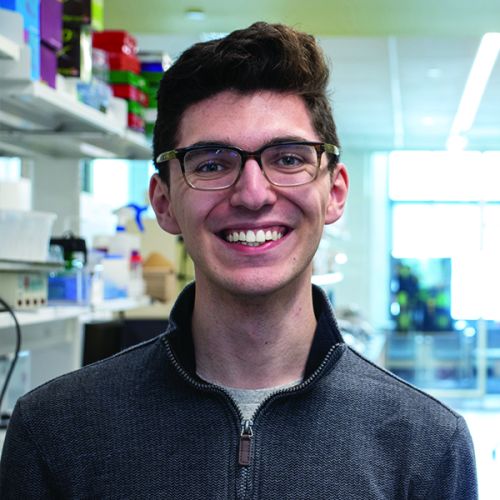
Studying biochemistry at the University of Lethbridge has allowed me to connect and network with professors, faculty, and experienced students while also learning much about the biology and chemistry of living things. By taking an applied study with professor Roy Golsteyn over the summer, I learned how to apply knowledge from my classes to real research, while also gaining connections to organizations both on campus and around Southern Alberta. I never thought that I’d be able to get involved so closely with actual research during my undergraduate studies. Additionally, I learned how to use knowledge and skills from my classes and labs in a work environment. Altogether, studying biochemistry at the University of Lethbridge has allowed me to build my knowledge and skills as a scientist while also giving me the opportunity to contribute and get involved with the university‘s research projects.
- Tanner, Biochemistry
Sample classes
Sample classes list:
- Introductory Biochemistry
- Proteins, Enzymes & Nucleic Acids
- Bioenergetics & Metabolism
- Cell Biology
- Principles of Genetics
- General Chemistry I&II
- Organic Chemistry I&II