
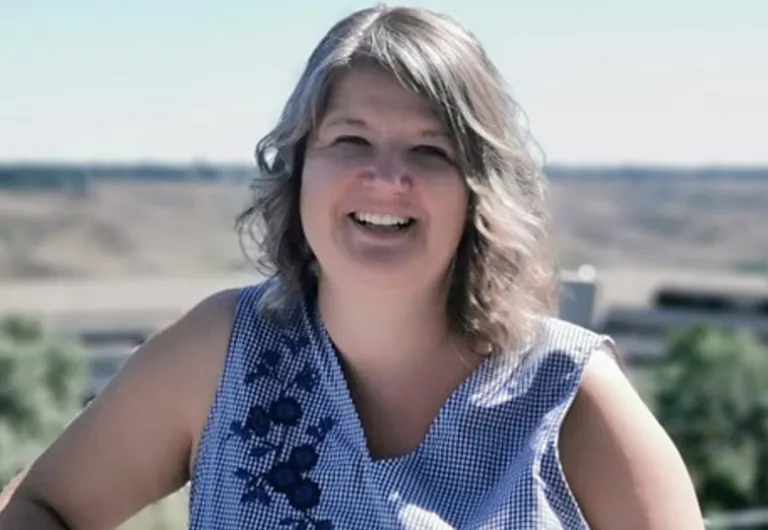
Janice Victor
Associate Professor
About
In addition to qualitative research, Janice is an emerging artist in the ceramic arts, supplemented by bronze casting and painting. She is a third generation Canadian settler from a rural background in Treaty 6 territory.
Education:
- PhD – University of Saskatchewan, Psychology (Culture & Human Development) '14
- BA (Honours) 2003 – Wilfrid Laurier University, Psychology (Community/Social/Clinical) '03
Research Focus:
As a cultural psychologist, her primary interests lay in the inquiry into the reciprocal influence of our socio-culturally constructed worlds on the lived experiences of people and their communities. This work requires a critical examination of worldviews, knowledge and value systems, power relations, and mechanisms of social control to learn how people are influenced by, and respond to their social environments. Her work is grounded in principles of social justice, anti-racism, anti-colonialism, and environmental justice. Her expertise resides in deconstructing the sociocultural structures (i.e. institutions, frameworks) that affect people’s capacity to thrive.
Teaching Experience:
Prior to coming to the U of L, she taught courses in Psychology (Introduction to Psychology; Adolescent Development; & Cultural) as well as the Anthropology of Gender at the University of Saskatchewan and Lakeland College. The courses Janice currently teaches are:
- INHL 2000 Indigenous Healing and Restoration
- INHL 3300 Traditional Indigenous Health Concepts
- INHL 3310 Contemporary Issues in Indigenous Health
- INHL 3400 Indigenous Community Development
Potential graduate students should have interest in:
- Qualitative or Indigenous methodologies; arts-based practices or methodologies; archival or policy research
- Critical analysis of cultural & social environments, knowledge & belief systems, or social conditions in relation to the student’s topic of interest
Examples of past graduate student topics:
- Reproductive and mental health experiences among Afghani women refugees who were married as children (Fatemeh Salehi-Shahrabi, PhD Candidate)
- Cultural safety in action: Advancing reconciliation and equity through Indigenous knowledge in therapeutic recreation (Amanda Ervin, PhD Student)
- Ohpitapitapiiyim (To carry in our womb): Examining postpartum experiences of Blackfoot mothers and the role of traditional kinship in addressing maternal health inequities (Deserae Tailfeathers, MSc Student, co-supervised with Dr. Chloe Crosschild)
Areas of Interest & Projects:
- Social constructionism; story and narrative as knowledge transmission and other forms of meaning-making
- Indigenous sovereignty; settler decolonization; reconciliation and structural change
- Art as a tool for healing, visual expression, and research
- Qualitative and Indigenous research methodologies
Her past projects involve:
- The narrative analysis of men’s experiences of transformation & contradiction within sexual offender treatment & community reintegration
- Art-based (image elicitation) investigation of healing among Blackfoot peoples experiences homelessness & substance misuse
- Examination of Indigenous people’s experiences of being in the child welfare system through: scoping reviews, survey, and arts-based storytelling
Dr. Victor has since shifted into the topic of settler decolonization to examine the discourses, structures, and ideologies that maintain the settler colonial state. Her current project brings together my artistic practice with autoethnography and archival research of place/land to juxtapose the narratives of her family’s immigration and settlement in rural central Alberta with the knowledge and narratives of the Nehiyaw people who were the original peoples of those lands.
Past Publications:
- Dirk, A. J., Ervin, A. R., Odekina, H. I., Sahlehi-Shahrabi, F., Luck, C. E., Greenshields, M. C., & Victor, J. M. (2026). Mental health and psychosocial conditions affecting the wellbeing of Indigenous children involved in child protection services: a scoping review. Journal of Public Child Welfare, 1–24. https://doi.org/10.1080/15548732.2026.2703266
- Ervin, A., Odekina, H., Dirk, A., Salehi-Shahrabi, F., Luck, C., Greenshields, M., & Victor, J. M. (2026). The Indigenous child welfare system and transitions to independence: A scoping review. Children and Youth Services Review, 180, 108688. https://doi.org/https://doi.org/10.1016/j.childyouth.2025.108688
- Victor, J., Goulet, L., Linds, W. & Eninew, L. (2021). Storyscapes of place: First Nation youths’ photographic depictions of home. Journal of Youth Studies. 25, 512-529. doi:10.1080/13676261.2021.1902964
- Victor, J. M., Shouting, M., DeGroot, C., Vonkeman, L., Brave Rock, M., & Hunt, R. (2019). I’taamohkanoohsin (everyone comes together): (Re)connecting Indigenous people experiencing homelessness and substance misuse to Blackfoot ways of knowing. International Journal of Indigenous Health, 14, 42-59. doi:10.32799/ijih.v14i1.31939
- Victor, J., Goulet, L., Schmidt, K., Linds, W., Episkenew, J., & Goulet, K. (2016). Like braiding sweetgrass: Nurturing relationships and alliances in Indigenous community-based research. International Review of Qualitative Research, 9, 423-445. https://doi.org/10.1525/irqr.2016.9.4.423.
Selected Grants:
- Victor, J., Clark, C., Pyjl, E., & Greenshields, M. (2021-2023). Mapping the landscape of Indigenous child welfare knowledge and research. Social Sciences and Humanities Research Council. (Insight Development Grant, ($70,504)
- Victor, J. & Greenshields, M. (2021-2022). Mapping the landscape of Indigenous child welfare research. University of Lethbridge. (Community of Research Excellence Development Opportunities (CREDO) ($15,000)
- Victor, J., Awosaga, O., McIntyre, D., & Fox, D. (2019-2023). Ai’aoskiikowaata (providing guidance to youth): Blackfoot knowledge as a path to wellness. Making the Shift: Youth Homelessness Social Innovation Lab, Networks of Centres of Excellence (MtS Research Program, ($85,579.20)