
Previous Environmental Science Talks
The Environmental Science Seminar Series brings together guest speakers throughout the academic year to explore varied topics within Environmental Science. See below for previous talks in the series

When life gives you Lemnas, make Lemnas age: Three short vignettes on the evolution of senescence
Dr. Laird discussed his lab’s recent progress on the ecology and evolution of senescence, using tiny aquatic plants in the genus Lemna (duckweeds) as a lens to bring three themes into focus:
(1) Parental age effects: Does a parent’s age dictate its offspring’s fitness prospects?
(2) Caloric restriction: Dietary caloric restriction extends lifespan in animals – does an analogous phenomenon occur in plants?
(3) Temporal scaling: Do intrinsic and extrinsic mechanisms that alter the pace of senescence leave the shape of senescence intact?
Dr. Laird synthesized his findings across these themes to show how Lemna serves as a powerful model for addressing fundamental questions regarding the selective pressures and constraints that shape patterns of aging.

Norms and Networks: : Investigating Social Behaviour in Science
Within academia, resource constraints, competitive careerism, and performance-based metrics create incentives that prioritize personal and institutional prestige over core epistemic values such as transparency, openness, and fairness. I argue that scientists’ social behaviour is a central component of maintaining the epistemic values that inform scientific integrity.
My research examines perceptions of social norms in science among faculty and trainees (n = 615) across Alberta’s three major research universities. Preliminary findings reveal a clear tension between the behaviours scientists endorse as ideals and those enacted within everyday academic settings. Widening gaps between ideal and actual behaviour may encourage faculty and students to internalize problematic norms or disengage from academic careers altogether, raising concerns about personnel recruitment, institutional sustainability, and public engagement with science.
Social behaviour also profoundly shapes scientific training. A complementary personal social network analysis of graduate students and postdoctoral fellows (n = 93) demonstrated that professional development is deeply embedded in interpersonal dynamics. These networks exhibited substantial variability in social resources, and affective ties among members predicted satisfaction with academic support, research productivity, and overall program satisfaction. Together, these findings underscore how social behaviour can both challenge and sustain contemporary scientific culture, and suggest that strengthening scientific integrity and training outcomes depends, in part, on how scientists engage in their professional relationships.

Where Does Glacier Melt Go? Groundwater Pathways in High Mountain Catchments
Mountain glaciers are retreating rapidly worldwide, altering not only surface runoff but also subsurface hydrological processes that remain poorly quantified. In many high-elevation catchments, groundwater plays a critical role in sustaining streamflow during dry seasons, yet the extent to which glacier melt contributes to groundwater recharge, and where this water ultimately resurfaces, remains uncertain. In this talk, I present two contrasting approaches to estimating glacier–groundwater interactions in data-sparse mountain environments, drawing on case studies from the Langshisha basin in the Nepal Himalaya and the Quilcayhuanca basin in the Peruvian Andes. Using a combination of field observations, conceptual models, and numerical hydrological modelling, I show how glacier melt can constitute a substantial component of groundwater recharge and downstream water supply, even as glaciers decline. By comparing a complex coupled surface–groundwater modelling framework with a simpler, process-guided approach, this seminar highlights both the opportunities and limitations of current methods and discusses implications for mountain water security under future climate change.

Climate and Land Use Effects on Greenhouse Gas Emissions from Aquatic Ecosystems in the Northern Great Plains
Dr. Kerri Finlay (Professor, University of Regina)
Climate and Land Use Effects on Greenhouse Gas Emissions from Aquatic Ecosystems in the Northern Great Plains
Bio: Dr. Finlay is currently Professor and Co-Director of the Institute for Environmental Change and Society, and Past President of the Society of Canadian Aquatic Sciences. Her research focuses on aquatic ecology and biogeochemistry, investigating the role of Prairie lakes, wetland ponds, and reservoirs in the global carbon budget, and the effects of anthropogenic activities on water quality. She collaborates to bring social and political perspectives into research, through conflict, vulnerability, and adaptation analyses, as well as involving local communities and citizens through a Community-Based Water Quality Monitoring program
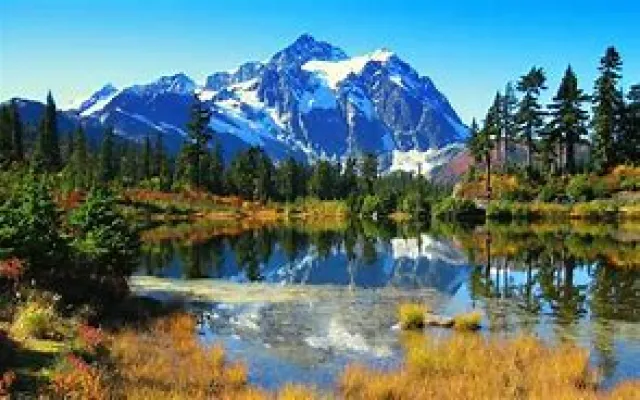
Leveraging mountain ecosystems to address biodiversity questions in the Eastern Afromontane Biodiversity Hotspot
Fairo Foryuy (Postdoctoral Fellow at Shelley Hoover's lab, UofL)
Leveraging mountain ecosystems to address biodiversity questions in the Eastern Afromontane Biodiversity Hotspot
Sugars from the sea: Sustainable feed additives for cattle
Seaweed plays a crucial role in carbon cycling and is expected to become a valuable source for sustainable biomass, with applications in biofuel production, human nutrition, and animal feed. Historically, seaweed has been used as a feed source for livestock grazing near coastlines; however, the process by which it is digested in the rumen remains unknown. In this study we report the cell wall structures of two seaweeds that were harvested from the waters of the Pacific Northwest, Saccharina latissima and Mazzaella japonica. To determine how ruminants digest these algal species, we employed a combination of experimental approaches, including animal models, bacterial imaging, multilayered meta-omics, bioinformatics, and enzyme biochemistry (Figure 1). We demonstrate that microbial pathways called “polysaccharide utilization loci” dedicated to brown and red seaweed polysaccharide catabolism exist and can be found in ruminants from geographically distinct populations. The evolution of algal consuming intestinal bacteria is complex, and these pathways may have been acquired and maintained through different mechanisms. Algal polysaccharide foraging by the intestinal microbiota appears to be a globally distributed, latent trait across the order Ruminantia, encoded within the microbiome as part of its microbial “dark matter”. The persistence of these pathways across diverse ruminant populations alludes to their role in adapting to dietary shifts, or possibly reflects the importance of seaweed consumption in the lifestyles of ruminant ancestors.
Will the real zombie please stand up – and sit down
The absurd behaviours of ants infected with larvae of the lancet fluke, Dicrocoelium dendriticum, have captivated parasitologists and ecologists for over 50 years. Ants that contain even a single brain-worm are chauffeured from their nests onto flower blossoms, where they remain firmly attached with their mandibles. The ants remain attached until ambient temperature exceeds a fatal maximum. Then they detach, return to their nests, and resume normal ‘ant’ behaviours. The fluke was introduced from continental Europe into Cypress Hills Park in the 1990’s where it is now common in land snail, ant, and ungulate hosts. Determining the underlying mechanisms for the bizarre ‘attach-detach-repeat’ sequence of ant behaviours and their adaptive significance is a focus of our ongoing research. One guiding premise is that determining the nature of the reversible ‘on/off’ switch that characterizes the manipulation will help us better understand the general and widespread phenomenon of host manipulation by parasites. A second premise is that integrative approaches that combine behavioural ecology, molecular ecology, GIS technology, genomics, and brain imaging can provide key insights into the nature of host manipulation and into the nature of parasite emergence into novel hosts.
Cow Patty Critters: an introduction to insects in cattle dung and the non-target effects of parasiticide use
Fresh cattle dung supports a rich community of diverse insects. Their feeding, breeding and tunnelling activities restore nutrients to pasture soils and increase soil permeability to water and air. By accelerating the removal of dung from the soil surface, they eliminate breeding sites for parasites and pest flies affecting cattle and remove the pat as a barrier to the growth of new vegetation. Kevin will discuss these topics and results of research showing how dung-breeding insects are affected by residues in dung by cattle treated with parasiticides.
Tires: Saving and taking lives
Mass mortalities of Coho salmon have been observed for decades in the Pacific Northwest. Recently, the cause of those moralities was identified. The culprit, 6PPD-quinone, is a transformation product of the antioxidant, 6PPD, that is added to tires to prevent rapid degradation. For the past 4 years, my lab has been working to understand species sensitivity to 6PPD-quinone, and its molecular and biochemical mechanisms of toxicity. This talk will cover that work, and more.