
Accessiblity and Disability
Accessibility and Disability
Creating an accessible campus for everyone
One of the goals of the Accessibility, Belonging and Community team is enhancing the accessibility of our campus by supporting the development of an institutional approach to accessibility in alignment with the ULethbridge Strategic Plan.
This includes increasing awareness around issues of disability and accessibility, changing attitudes and behaviours surrounding accessibility as well as creating resources and tools to build a culture of accessibility across the institution.

Accessible Learning Centre (ALC)
The Accessible Learning Centre provides tools for students with disabilities so they can thrive here at the University of Lethbridge. Visit the ALC website for information about assistive technologies, grants for students with disabilities, registering for disability support and more resources.

Accessible Learning Centre (ALC) Sharepoint for ULethbridge Employees
The ALC also offers a wealth of information for employees on their SharePoint site, including details on classroom accommodation tools, ALC intake practices and Universal Design resources.

ULethbridge master's student initiates study on youth ADHD experiences in sport
A new study by a University of Lethbridge master’s student Justine Cotnoir seeks to broaden the understanding of how the presence of youth diagnosed with ADHD are perceived and addressed in team sport environments. Results are intended to add to the scant literature on the subject and open conversations around supporting neurodiverse individuals, their teammates and coaches to create positive sport experiences.
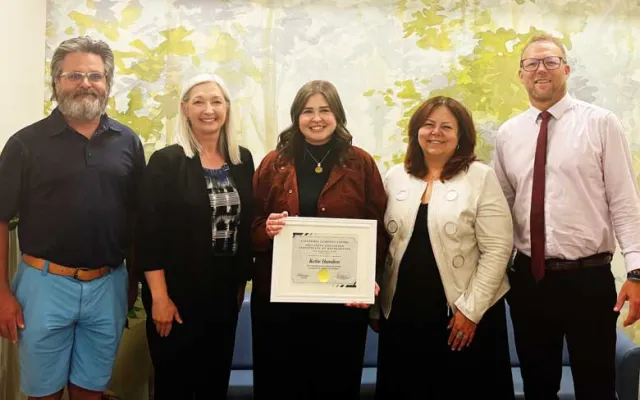
Inclusive Education Certificate awarded to Health Sciences instructor Keltie Hamilton
Keltie Hamilton (Instructor, Public Health) was recognized as the 2024 recipient of the Inclusive Education Certificate of Recognition. This award was created by the Accessible Learning Centre to acknowledge instructors who foster inclusive and accessible learning environments.

EDI Scholar advances accessibility in the classroom
Dr. Sean Fitzpatrick (Mathematics & Computer Science – Faculty of Arts & Science) plans to work with undergraduate student assistants to ensure that the open textbooks for many mathematics courses are fully accessible for all students, including those who require screen reader technology. Part of this work will include ensuring that all images have alt-text descriptions, and that all features of the textbook can be accessed using keyboard navigation.

Seizures Unscripted - Dr. Athena Elafros
Dr. Athena Elafros (Sociology Department - Faculty of Arts & Science) is a qualitative cultural sociologist and has published in the areas of popular music, microaggressions, and social inequalities. For the past number of years, she has also started researching and teaching in the areas of critical disability studies and access. She is currently collaborating on a community-based oral history project titled, Seizures Unscripted: Oral Histories of Epilepsy in Canada and the United States. One of the primary goals of Seizures Unscripted is the creation of an open-access, accessible repository that will benefit epilepsy communities, scholars, and clinicians.
Therapeutic Recreation students invent adaptive tools to help people with disabilities
In 2023 Lyndsay Stevenot (BTR '24) and Carlie Hudson (BTR '24), recipients of the Adaptive Technology RBC Award, and Kevin Roelofs, former Innovation Zone coordinator in the Adaptive Technology program explain the inventions (adaptive tools) they’re working on to help enhance the lives of people living with disabilities.

ULethbridge Alum advocates for people with disabilities in the workplace
"Saying they can't hire me because I have cerebral palsy broke me because I can't change that about myself." ULethbridge alum Lionel Migrino (BMgt '22) is an advocate for people with disabilities and shares his difficulties finding employment with CBC News.
October is National Disability Employment Awareness Month (DEAM)
Disability Employment Awareness Month (DEAM) is an opportunity to raise awareness about the challenges to access and opportunity for a group of individuals who may go unnoticed in ableist organizational and social cultures. Disability is another key dimension of diversity that we must examine as we work towards building an accessible and inclusive campus.
For 2026, a group of individuals from the university community and beyond (faculty members, ABC Office and community representatives) came together to organize a series of events meant to explore the experiences and amplify voices from individuals with disabilities, experts and community organizations in topics such chronic illness, neurodivergence, disability and inclusivity, accessibility and others.
DEAM events are supported by:
The Accessibility, Belonging and Community Office, Faculty of Education, Faculty of Health Science, Faculty of Arts and Science, Student Services and the President's Office


Key Concepts
“Disability is a broad and evolving concept that encompasses physical, sensory, cognitive, intellectual, mental health, and other conditions that may be present from birth, result from an accident, or develop over time. It reflects the interaction between a person’s body and mind and the physical, social, and attitudinal environments around them.
Disabilities can be visible or invisible, permanent, temporary, or episodic, and understood through several different models of disability. Self-identification and lived experiences are essential in understanding how individuals experience disability, and in shaping inclusive and responsive environments.” (Canadian Centre for Diversity and Inclusion, 2026)
Ableism is discrimination, prejudice, or mistreatment of individuals with disabilities based on the unfounded belief that non-disabled individuals are superior. Ableism can be perpetuated on the individual and systemic level through attitudes and processes that disadvantage people with disabilities.

Each colour of the Disability Pride Flag represents a different type of disability or impairment.
Red: Physical disabilities
Gold: Neurodivergence
White: Invisible disabilities and disabilities that are not yet diagnosed
Blue: Emotional and psychiatric disabilities
Green: Sensory disabilities, including those of the deaf, blind, and deaf-blind communities
Black: Mourning over eugenics and neglect faced by disabled people
Stripes: The diagonal stripes represent cutting through barriers and solidarity among the various sub-communities of disabled people
Accessibility refers to the extent to which a product, service or environment is available to be used by all audiences, particularly those with disabilities. At ULethbridge, we strive to ensure that our services, programs, policies, spaces, environments and actions are welcoming and inclusive to a wide range of abilities, lived experiences and backgrounds.
Accommodation for disability is required by law to eliminate barriers to employment and enable all employees to realize their potential and contribute fully.
The duty to accommodate means that sometimes it is necessary to treat someone differently in order to be fair. For example, asking all job applicants to pass a written test may not be fair to a person with a visual disability. In such cases, the duty to accommodate may require that alternative arrangements be made to ensure full participation of a person or group. (Canadian Human Rights Commission).
The Accessible Canada Act builds on the Human Rights Framework (Canadian Charter of Rights and Freedoms and the Canadian Human Rights Act) and Canada’s commitments as a State Party to the United Nations Convention on the Rights of Persons with Disabilities, through a proactive and systemic approach for identifying, removing and preventing barriers to accessibility.
The purpose of the Accessible Canada Act is to make Canada barrier-free by January 1, 2040. This involves identifying, removing and preventing barriers in federal jurisdiction.
Physical and mental disability are protected grounds under the Alberta Human Rights Act. The Act also protects against perceived disability, where others see a person as having a disability and treat them in a discriminatory way. In Alberta, employers, landlords, and service providers cannot discriminate against a person because of their disability.
Employers, service providers, landlords and others have a duty to accommodate. This means making changes to rules, standards, policies, workplace culture and physical environments to eliminate or reduce the negative impact that someone faces because of a protected ground.
The goal of accommodation is to provide an equal opportunity for an individual or group to participate in any of the protected areas under the Alberta Human Rights Act.
The United Nations Convention on the Rights of Persons with Disabilities, adopted in 2006, and signed by Canada in 2010, represented moving from viewing persons with disabilities as “objects” of charity, medical treatment and social protection towards viewing persons with disabilities as “subjects” with rights, who are capable of claiming those rights and making decisions for their lives based on their free and informed consent as well as being active members of society.
The Convention has 50 articles explaining the rights people with disabilities have under the Convention. For example:
- the right to live free from discrimination
- the right to an inclusive education
- the right to employment
- the right to make one’s own decisions
Resources
Learn more about Accessibility and Disability
Working with Disabilities
- ULethbridge Workplace Accommodations (employee only access)
- ULethbridge Fostering Accessibility (employee only access)
- Resources for Campus Leaders: Information on leadership and how to support diverse employees in the workplace including employees with disabilities and neurodiverse employees (employee only access)
- Alberta Employment First Network
- Disability Confidence Toolkit: Supporting employers in creating accessible and inclusive workplaces