
Alberta Lake Monitoring Project
The Alberta Lake Monitoring Project uses satellite imagery and geospatial analysis to investigate long-term changes in Alberta’s lakes and surface-water systems. By integrating annual lake mapping, lake-level observations, LiDAR-derived elevation data, and dynamic geodatabases, the project aims to support improved monitoring of lake extent, connectivity, and hydrological change across the province.
Project overview
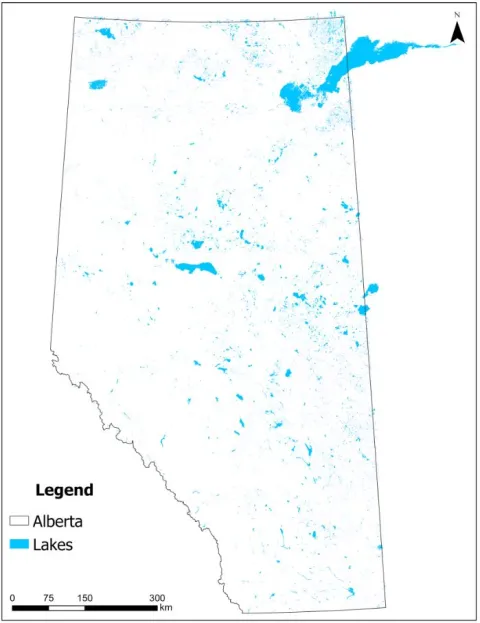
This project uses multi-decadal satellite imagery and geospatial analysis to map annual lake extent across Alberta from 1984 onward. The goal is to support lake monitoring, water-resource planning, and future lake-volume estimation.
What we are doing
We are creating annual lake polygon datasets, linking lake features through time, and building a dynamic geodatabase that allows users to track changes in lake area, fragmentation, and connectivity.
Why it matters
Alberta’s lakes are sensitive to climate variability, drought, land-use change, and hydrological shifts. Long-term spatial monitoring helps identify regional patterns of lake expansion, contraction, and changing water availability.
Data and methods
The project combines Landsat-based water products, high-resolution imagery, LiDAR-derived elevation data, lake-level records, and geodatabase tools to support validation and lake-volume modelling.


Project outcomes
Expected outputs include annual lake extent layers, regional lake-area summaries, validation datasets, and a time-enabled geospatial database for monitoring lake change across Alberta.
Partners / collaborators
Alberta Environment and Protected Areas
Office of the Chief Scientist
University of Lethbridge
Western University
i4Geo