
Dr. Amy Mack, an assistant professor of New Media and Canada Research Chair at the University of Lethbridge, and her research team have been awarded a Canadian Heritage grant worth approximately $227,000 to further their research into digital extremism.
The project seeks to understand the rise of disinformation influencers who create and spread online disinformation about gender and sexuality. This content is typically misogynistic, transphobic and homophobic. Mack and her research team, which includes Dr. Emily Gale (Music), Bryn Hewko (New Media), A.J. Lowik (Sociology), Brent Saccucci (Education), ULethbridge students, external collaborators at other universities and non-profit organizations, will also use the media technologies employed by disinformation influencers to counter their rhetoric.
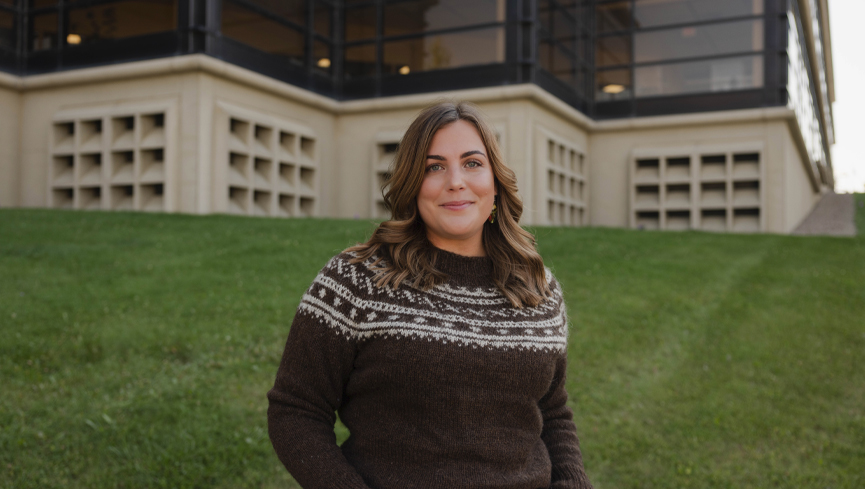
“The disinformation spread about gender and sexuality by social media influencers contributes to a toxic ecosystem that is both harmful and a threat to Canada’s democracy and social cohesion,” says Mack. “In addition to being harmful in its own right, online rhetoric can affect policy and legislation, impact access to health care and educational supports, and most disturbingly, incite offline violence.”
Combatting digital extremism has become increasingly urgent. Evidence shows that young people, especially cisgender boys and men, are at higher risk of becoming radicalized via social media that promotes toxic masculinity influencers who espouse hateful speech and incite violence against women and girls. The content produced by disinformation influencers also increasingly targets young cisgender girls and women.
“This project will add crucial insights into the Canadian context and respond to the needs of frontline workers such as educators, social workers, pro-social influencers and non-profit organizations as they confront increased radicalization of young people in classrooms and communities,” says Mack.
The goals of the research project are to understand why disinformation influencers are so effective at radicalizing young people in Canada, and to use those new media techniques and practices to produce new media outputs that counter disinformation. Working with ULethbridge students, the research team will develop a series of media-based campaigns to counter the disinformation and a guidebook for stakeholders on best practices for producing similar content.
