
Dr. Roberto Budzinski, assistant professor at the Canadian Centre for Behavioural Neuroscience at the University of Lethbridge, has been named a Tier II Canada Research Chair (CRC) in Spatiotemporal Dynamics and Neural Computation — one of 25 chairs recently announced across the country.
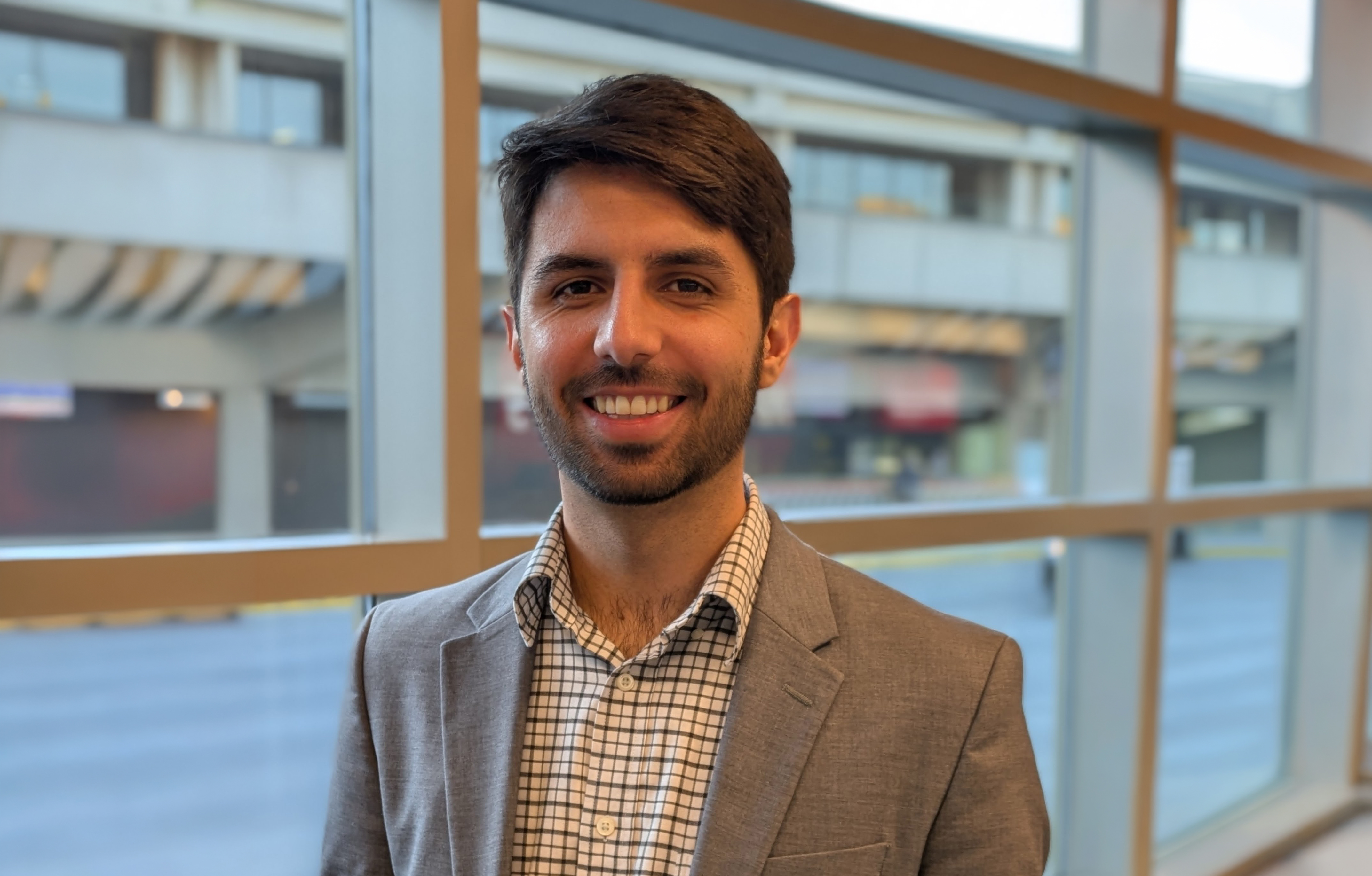
The five-year appointment comes with $100,000 in annual funding, plus approximately $39,000 in infrastructure support through the Canada Foundation for Innovation’s (CFI) John R. Evans Leaders Fund.
“I am deeply honoured to receive this award,” says Budzinski. “The support I have received from the University of Lethbridge and the Department of Neuroscience has been invaluable, and I look forward to building my research team and advancing our understanding of how artificial and biological brains work.”
Budzinski is an emerging international leader in network theory, complex systems, computational neuroscience and artificial intelligence (AI). His research tackles one of the biggest challenges in modern AI: opening the “black box” of neural networks to understand not just what they do, but how they do it.
Neural networks — the machine learning models that power everything from medical diagnostics to financial tools — are remarkably good at recognizing patterns and solving complex problems. But their inner workings often remain opaque, even to the researchers who build them. Budzinski’s work develops new mathematical tools to investigate these internal processes, which could increase trust in AI outputs and help researchers build more reliable and transparent systems.
Beyond AI, his research bridges the gap between artificial and biological brains. While scientists have a broad understanding of which areas of the brain govern which functions, individuals can vary significantly in how their brains are organized. Current models don’t always capture this variability. Budzinski’s approach is designed to work at the individual level, a step toward building personalized brain models that could open new doors in neurological health and treatment.
His CRC project will develop mathematical frameworks for studying how both biological and artificial networks organize their activity, with the goal of solving longstanding problems in neuroscience and AI that stem from this individual-level variability.