
Joint study with University of British Columbia lab identifies compounds in the Prairie Crocus that affect cell division
One of the most common prairie plants dotting the coulees of southern Alberta may prove to be anything but ordinary thanks to work out of Dr. Roy Golsteyn’s lab and the Prairie to Pharmacy program at the University of Lethbridge.
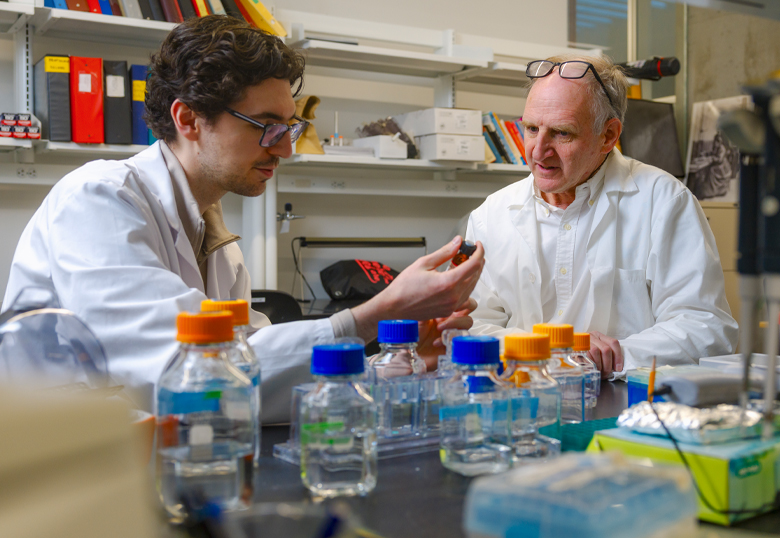
Utilizing extracts from the Prairie Crocus (Pulsatilla nuttalliana), a prominent spring prairie plant, Golsteyn and his students were able to identify a secondary metabolite made by the plant that affects the cell division process in human cells. The discovery helps researchers gain a greater understanding of what happens when cell division (mitosis) goes wrong in healthy cells, thus creating a cancer cell.
“Cancer cells depend on mitosis to continue to grow,” says Golsteyn. “We are studying chemicals from plants to find new tools and possibly medicines to study and treat serious diseases, such as cancer.”
By studying the Prairie Crocus, they first discovered that it contains two distinct anti-mitotic activities, whereas other plants previously studied reported only one. They then identified one of the active natural products as anemonin — the first such report that anemonin has anti-mitotic activity. Golsteyn, a biologist, then sent the extract to Dr. Raymond Andersen, a collaborator at the University of British Columbia, whose focus is natural product chemistry.
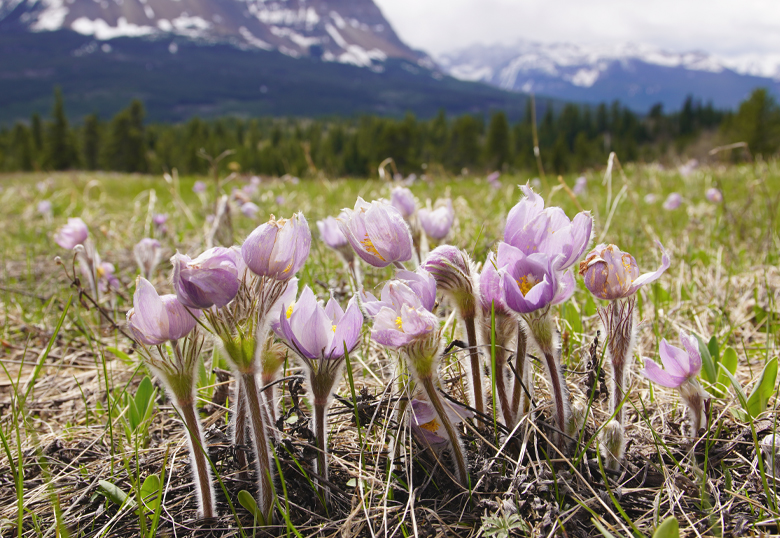
“While anemonin has been known for more than 200 years, our team found that what had been treated as anemonin is more complex than we previously understood,” says Andersen. “Anemonin is, in fact, a mixture of three chemicals and we were able to identify cis-anemonin as a new natural product.”
The labs produced two papers from their work that were recently published in Pharmacological Research — Natural Products and the Canadian Journal of Chemistry. Golsteyn says he’s excited about the prospects of this discovery and how it reinforces what they think is a much larger opportunity.
“Canada has extraordinary plant biodiversity, but we still know surprisingly little about the chemistry these plants produce. Prairie to Pharmacy is about systematically discovering that chemistry and determining what it does, with the long-term goal of finding new medicines.”
He adds that he relationship between his lab and Andersen’s has been essential in moving research forward.
“My laboratory brings the biology, and Dr. Andersen’s laboratory at UBC brings the natural product chemistry, but we are careful not to present this as a treatment claim,” says Golsteyn. “The importance is that these studies reveal new chemistry and new biological activity in a familiar Alberta plant, and they provide a foundation for future discovery.”
He points to one of today’s most common chemotherapeutic drugs, Taxol, a taxane compound isolated from the Canadian Pacific yew tree (Taxus brevifolia), which binds to tubulin resulting in the arrest of cells in mitosis. It was originally discovered through the type of fundamental research his group conducts.
Canadian plants, once understudied around the world, are gaining prominence due to the unique properties they possess simply trying to survive their harsh environment.
“All plants in the world have common types of chemicals, called primary metabolites, but when plants live in certain areas, like Canadian ecosystems, they are more likely to produce secondary metabolites that help them survive in their environment, which can be everything that you and I are familiar with such as super cold winters, very hot summers, temperatures that change within the same day,” says Golsteyn. “These secondary metabolites make Canadian plants so interesting.”
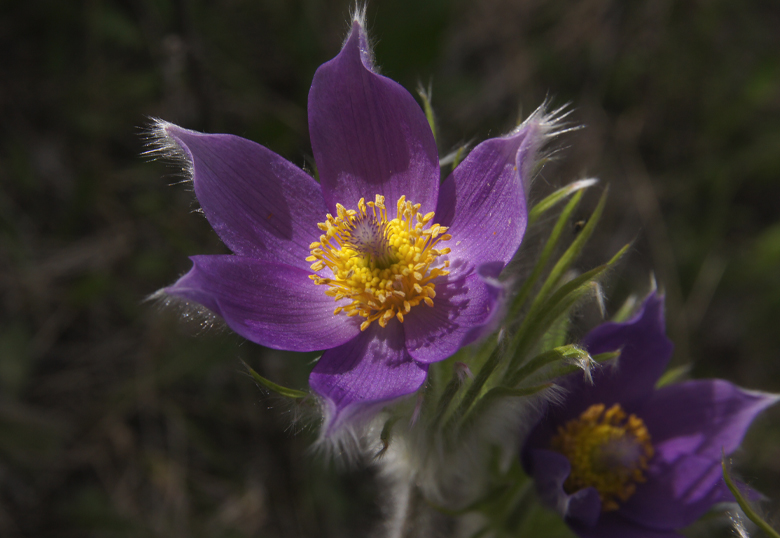
The Prairie Crocus is the perfect example because it is one of spring’s first flowers, coming out when temperatures could be -10C in the morning and then warm to 15C by the afternoon. Their hardiness partly comes from the production of these secondary metabolites. Likewise, as plants are scarce in such climates, they are sought after by animals, prompting the plant to again make secondary metabolites, which are designed to be toxic to keep animals at bay. Golsteyn says those chemicals, toxic as they are, offer the properties they need.
“Some of our most useful medicines originated from compounds that are toxic to cells,” he says. “By identifying these chemicals and understanding how they work, we provide the foundation for future research to determine whether they might contribute to new medicines.”