
National Public Health Week, April 6 to 10, is a time to highlight all the ways public health practitioners make a difference in the health and well-being of Canadians.
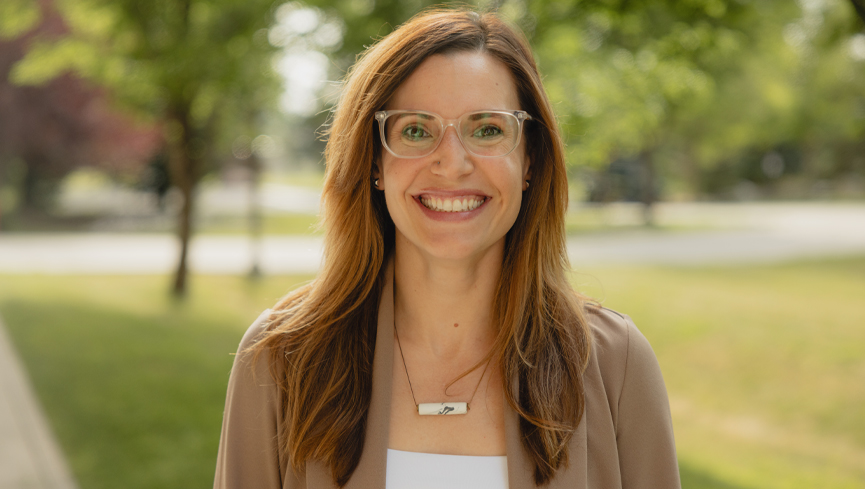
“National Public Health Week provides us with an important opportunity to acknowledge the many ways in which public health initiatives have improved daily life and strengthened our communities,” says Dr. Julia Brassolotto, associate dean in the Faculty of Health Sciences at the University of Lethbridge. “This week is also a chance to honour public health workers, who work tirelessly to advocate for policies and practices that promote good health for all.”
ULethbridge Public Health students, whether they are pursuing the two-year post-diploma or the four-year undergraduate program, are well prepared for diverse careers through a combination of classroom learning, hands-on activities and practicums in the community. The undergraduate degree is the only program of its kind in Alberta.
“Through coursework and experiential learning, our program provides Public Health students with the knowledge and skills to promote and protect population health locally and globally," says Brassolotto.
For example, students in Keltie Hamilton’s medical microbiology course spend time in biology labs to solve a food-borne illness outbreak, thanks to a collaboration with the biology department. The scenario is based on a real-life Shigella (an intestinal bacterial infection) outbreak at a shelter in Edmonton a few years ago. Students must first identify the pathogen and then develop recommendations to address the outbreak. They also create a news statement to distribute to the media.

In partnership with ULethbridge nursing and drama departments, Hamilton’s students in the Advanced Public Health course participate in a mass casualty simulation based on a ferry crash scenario. The public health students act as operations managers, facilitate communication with paramedics, the hospital, and emergency services, and ensure the nursing team has the support it needs.
“We work hard to make sure our students get real-world experiences, and we try to relate those experiences to what’s currently going on in the world,” says Hamilton.
Public Health students can also elect to complete a practicum in the community. In the past, students have worked in occupational health and safety, analyzed data for the provincial government and worked with Pro-Choice YQL.
“We think these placements are so valuable for students because they give them real-world experience and a reference they can use in their job search,” says Hamilton.
Experiences like these allow students to develop their core competencies in public health, such as analyzing and synthesizing data and communicating their findings to the public.
“Research experience is good in terms of career development, especially for students who are interested in graduate schools, and it’s something that can help them win competitive graduate scholarships,” says Larouche.
Details about ULethbridge Public Health programs are available online.