
As artificial intelligence and its influence on society continues to advance at breakneck speed, the call for regulatory action is intensifying. While the federal government continues to make headway on a Pan-Canadian Artificial Intelligence Strategy focused on commercialization, standards, and talent, scholars from the University of Lethbridge and Trent University are poised to fulfill another knowledge gap.
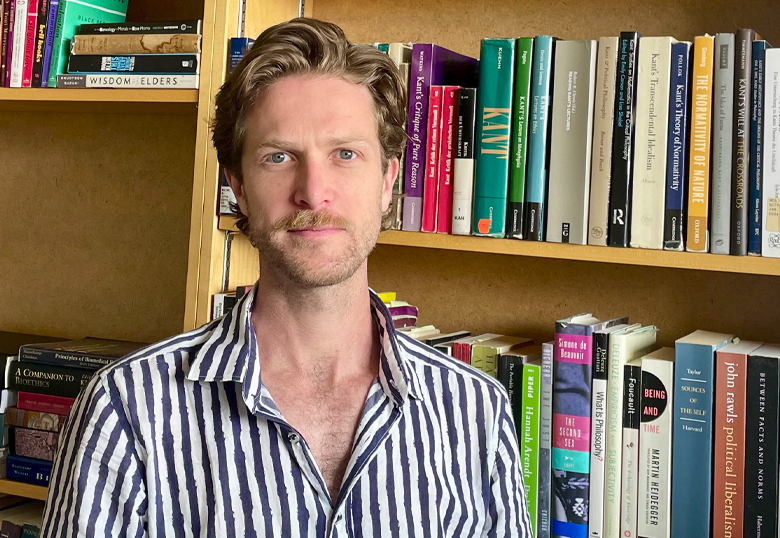
Drs. Nicholas Dunn (ULethbridge) and Martina Orlandi (Trent University) have launched the first and only Canadian Association for the Philosophy of Artificial Intelligence (CAPAI) to address a longstanding chasm in Canada’s AI landscape: a coordinated, national forum for philosophers working on artificial intelligence.
“AI is accelerating faster than institutions and policies can keep up, and philosophers have an important role to play in helping articulate the values and principles that should guide how these technologies are designed and deployed. Without that clarity, we risk allowing innovation to outpace reflection,” says Dunn, a co-founder of CAPAI and assistant professor of philosophy at ULethbridge.
“While Canada has strong communities of researchers working on AI from technical and policy perspectives, there was no dedicated space for philosophers of AI to connect,” adds Orlandi, CAPAI co-founder and an assistant professor in the new AI degree programs at Trent University Durham Greater Toronto Area (GTA). “Networking and collaboration that once happened in isolation can now take place in a more organized, systematic and efficient way.”
CAPAI brings together scholars and their work examining both foundational questions, such as the nature of intelligence, cognition and decision-making, and urgent ethical and social concerns, including AI’s impact on labour, health care, bias, surveillance and democracy.
While much of the interest in AI applications has been focused on efficiency and automation, both scholars emphasize that the increase in AI adoption and the ways platforms are being used are raising deeper questions about human identity and well-being. Researchers are increasingly focused more on how AI is implemented in the social sphere.
“Our jobs, our struggles, and our decision-making are deeply tied to how we understand ourselves. As AI systems begin to replace or reshape these activities, we’re forced to ask whether a life made easier by technology is necessarily a more fulfilling one,” says Orlandi. “When we see people using AI chats as therapists or entering into relationships with AI personas, what does that say about our well-being today and do we fully understand the consequences of those interactions?”
Since launching earlier this fall, CAPAI has 14 members and has introduced a national website and online speaker series, with plans for in-person meetings and public engagement. The association also aims to make Canadian research in the philosophy of AI more accessible to students, policymakers and the broader public through its website, ensuring philosophical insight becomes a foundational part of Canada’s AI conversation rather than an afterthought.