This event is from the archives of The Notice Board. The event has already taken place and the information contained in this post may no longer be relevant or accurate.
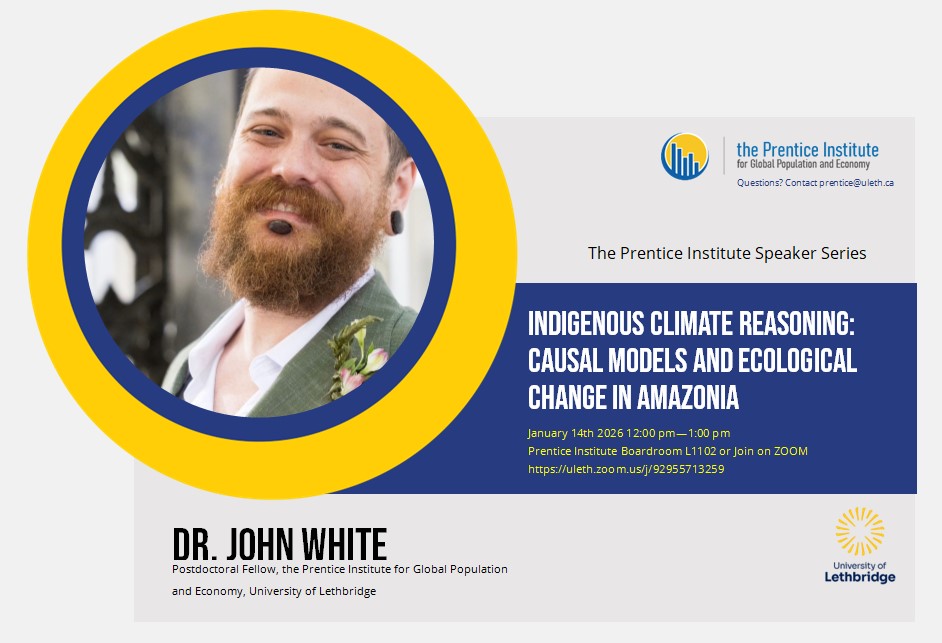
This study examines how Indigenous Runa in Amazonia reason about climate change through integrated ecological, social and spiritual logics. Drawing on ethnographic research in the Quijos Runa community of Mondayacu, Ecuador, it documents local causal models that link shifts in rainfall, temperature and seasonal cycles to plant responses. These models describe patterned relationships — for example, altered rainfall leading to delayed flowering or early fruit drop, with subsequent impacts on food and medicinal plants. Such accounts show that Runa climate reasoning is not only observational but interpretive and theoretical, embedding human–environment interactions within coherent causal frameworks. By situating these findings within related scholarship, the article demonstrates how Runa causal models complement scientific understandings of ecological change in Amazonia. Attending to Indigenous climate reasoning advances decolonial approaches to science by recognizing Indigenous peoples as active theorists and collaborators in climate research. Their context-specific insights can reveal subtle ecological shifts often missed by large-scale monitoring, inform culturally grounded conservation and guide more equitable climate policy. More broadly, these frameworks enrich environmental and social scientific knowledge while strengthening adaptive, inclusive and collaborative strategies for responding to global biocultural diversity and climate challenges.
Zoom link: https://uleth.zoom.us/j/92955713259
or in person L1102 - Prenitce Institute Boardroom
Event is free to attend, either in person in L1102 or via Zoom.
Contact:
Prentice Institute | prentice@uleth.ca